Frequently Asked Questions
These are some of the questions we frequently receive from prospective students and applicants. You may find the answers to your own questions below.
Last update: 23-10-2026
About the Student Profiles
The composition of our admitted students varies across academic years. The information below presents an overview of the diverse profiles that characterize our student body on average.
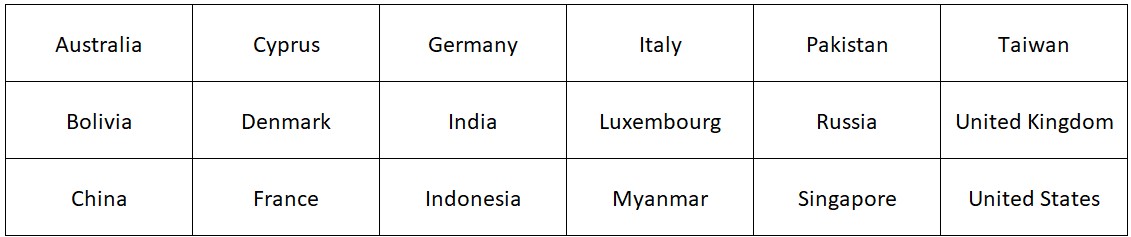
Nationality:
The MSF program embraces diversity and global perspectives. Although a majority of our students are from Thailand, we are proud to have welcomed participants from numerous countries worldwide, as highlighted in the table below.
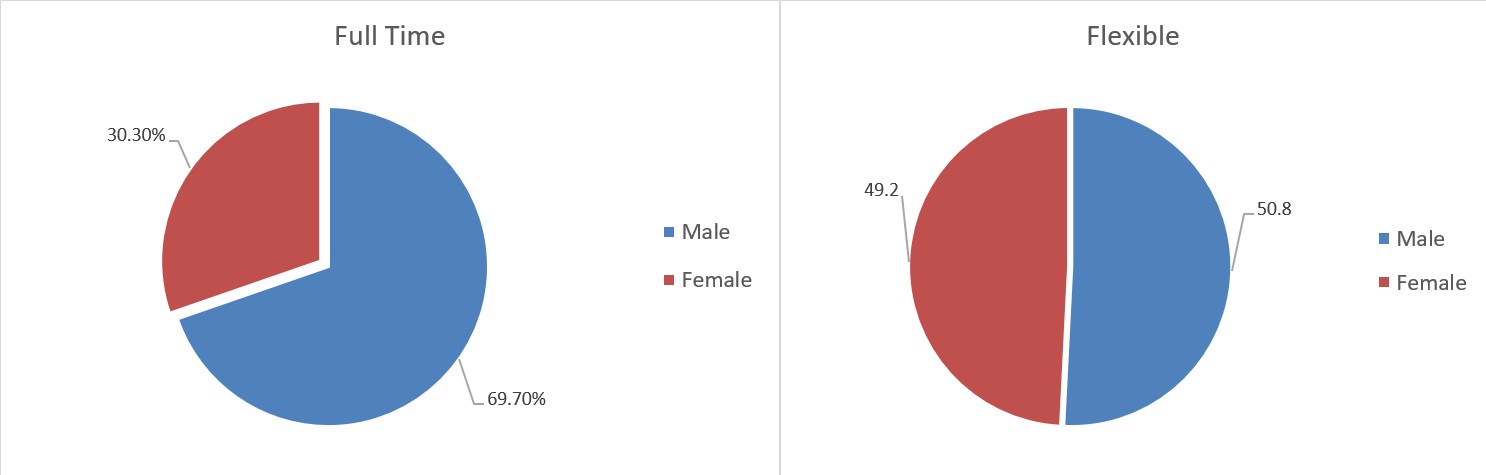
Gender:
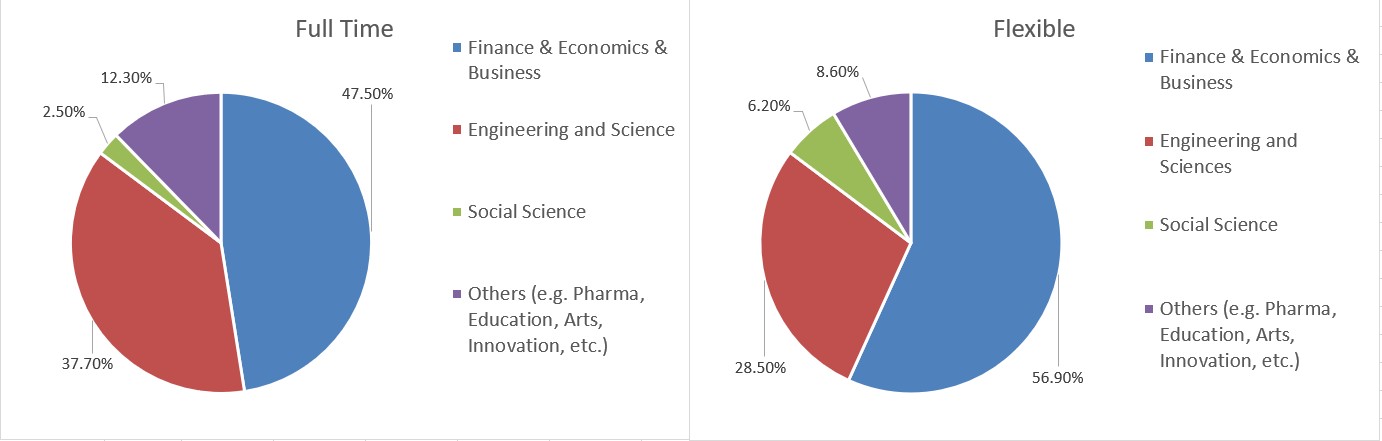
Education Background:
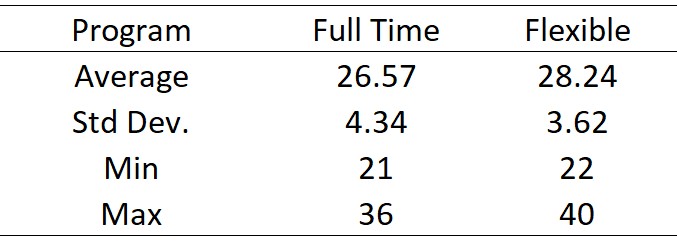
Age:
Application Period and Admission Process
Q: When can I apply for the MSF Program?
A: The MSF Program typically accepts applications during December to April each year. The exact application dates will be announced on our official website. Prospective applicants are encouraged to check our website regularly for updates and prepare the required documents in advance, including English proficiency test scores, academic transcripts, and relevant supporting documents. There is no need to rush your application. Applying early does not, by itself, give you an advantage in the admission process, as long as you submit your completed application within the specified deadline.
Q: When does the MSF Program begin? Can I start in the second semester?
A: The MSF Program admits one new cohort of students each year, with all admitted students beginning their studies together.
Before the first semester begins, students have the opportunity to attend pre-term courses designed to refresh their knowledge and strengthen their foundation in subjects essential for studying finance. These courses are particularly helpful for students who may not have a background in finance or related fields. The pre-term courses are typically held during June and July, while the regular academic year begins in August for both Full-Time (FT) and Flexible (FX) students.
The program does not accept new students in the second or third semester. Prospective applicants are therefore encouraged to plan their applications accordingly.
Q: Why does the MSF Program have Batch 1 and Batch 2 in the admission process? What is the difference?
A: The MSF Program has one application period each year but offers admission interviews in two batches. The only difference between the two batches is the timing of the interview.
Batch 1 is intended for applicants who are ready and prefer to complete their interviews earlier. Applicants who are selected in Batch 1 are guaranteed admission to the MSF Program for the upcoming academic year. Applicants who are not selected in Batch 1 will remain under consideration and be evaluated alongside applicants in Batch 2. Each applicant is required to attend the admission interview only once, regardless of the batch.
The final official admission results for both batches are announced together, typically in May, after the Batch 2 interviews have been completed. Regardless of which batch they apply to, all admitted students begin their studies together in the same academic year.
Q: How many students are being accepted each year?
A: There is no specific number of accepted applicants each year. The program evaluates applicants based on various criteria to ensure alignment between the MSF Program’s offerings and the applicants’ objectives. Examples of criteria may include, but are not limited to, qualifications, communication skills, study objectives, readiness, as well as study and work backgrounds.
Q: When will the next MSF Open House be held?
A: Our most recent Open House was held in October. Details of upcoming Open House events and information sessions will be announced once confirmed in each year. For the latest news and updates, please follow our Facebook pages: MSF Chula and CBS Chula.
About the Program of Study
Q: What are the differences between Full-Time vs. Flexible and Plan A vs. Plan B. Aren’t they the same?
A: The Full-Time and Flexible programs differ primarily in class schedules and study plans. Full-Time students attend classes predominantly on weekdays from 9:00 AM to 4:00 PM. However, please note that some Full-Time courses may occasionally be conducted during weekday evenings or weekends. Flexible program students, on the other hand, have classes mostly on weekends or weekday evenings, making it a suitable option for those who wish to continue working while studying.
Plan A (Thesis track) and Plan B (Special Project track) are based on the applicant’s qualifications and graduation requirements:
- Plan A (Thesis track): This track is mandatory for applicants with less than 1 year of work experience, including fresh graduates with no work experience.
- Plan B (Special Project track): This track is recommended for applicants with more than 1 year of work experience.
To decide between the Full-Time and Flexible programs:
- If you wish to dedicate yourself fully to your studies and attend classes during weekdays, the Full-Time program is the right choice.
- If you prefer to continue working while pursuing your degree, the Flexible program is ideal as it allows you to attend classes on weekends or weekday evenings.
It is important to note that students in the Full-Time program may choose either Plan A (doing a thesis) or Plan B (doing a special project), depending on their work experience. However, students in the Flexible program, who typically have more than one year of work experience, are recommended to choose Plan B.
For more information about the program’s structure and requirements, please refer to the following link: https://msf.cbs.chula.ac.th/#academic-section
Q: What are the differences between the MSF and MFE Programs at Chulalongkorn Business School?
A: The focus of the MSF program is on building a strong fundamental knowledge of finance theories and their applications in the finance industry. It offers a vast array of studies suitable for students aiming at various areas in finance, including securities firms, mutual funds, banking, insurance, and other sectors. On the other hand, the MFE program centers on applying mathematical and quantitative tools, coupled with computer programming skills, to solve problems and create innovations in finance. This program provides rigorous technical training complemented by a strong foundation in finance, paving the way for a successful career in quantitative finance.
Q: Can I apply to both the MSF and MFE programs?
A: Yes. Applicants may apply to both the MSF and MFE programs. However, a separate application must be submitted for each program. Each application will be evaluated independently through the respective program’s admission process.
Q: Can I apply to both the Full-Time and Flexible study options within the MSF Program?
A: Yes. Applicants may apply to both the Full-Time (FT) and Flexible (FX) study options. However, a separate application is required for each option, and each application will be evaluated independently.
Nevertheless, we encourage applicants to carefully consider which study option best suits their academic goals, career plans, and personal circumstances, rather than applying to both simply to increase their chances of admission.
Q: I expect to pursue a Ph.D. in the future. Should I choose the thesis track during my master’s studies in the MSF program?
A: Choosing the thesis track is not a mandatory requirement for pursuing a Ph.D. The expectations differ across doctoral programs and institutions. However, most Ph.D. programs look for candidates who demonstrate strong research skills, analytical competence, and evidence of scholarly work, such as publications.
In the MSF program, all students undertake rigorous coursework that provides a solid foundation for doctoral-level study. In addition, the Special Project can be further developed into a high-quality research paper and potentially published in a reputable journal.
In summary, the thesis track alone does not determine Ph.D. eligibility—unless explicitly required by a particular doctoral program. What matters most is your demonstrated research ability and academic preparation.
About Qualification, Academic Background and Eligibility
Q: Are there any specific academic background requirements or additional subject tests for admission?
A: The MSF Program welcomes applicants from a wide range of academic backgrounds. A bachelor’s degree in finance or business is not required. While many of our students have backgrounds in finance, business, accounting, engineering, or science, we have also welcomed students with degrees in pharmacy, dentistry, political science, law, and the arts. However, a solid foundation in mathematics, statistics, or calculus is essential, as these subjects can help students better understand the quantitative aspects of finance.
There is no minimum undergraduate GPA or work experience requirement. However, applicants must hold at least a bachelor’s degree and demonstrate their academic readiness, analytical abilities, and potential to succeed in the program during the admission interview.
Q: Can I apply if I am a recent graduate or currently completing my bachelor’s degree?
A: Yes. Recent graduates and students who are currently completing their bachelor’s degrees are welcome to apply. However, applicants must have completed their bachelor’s degree before the official student registration date at Chulalongkorn University, which typically falls around July each academic year.
Q: I already hold a master’s degree. Can I still apply to the MSF Program?
A: Yes. Applicants who already hold a master’s degree or a higher are welcome to apply. Having an existing postgraduate degree does not prevent you from pursuing further studies in the MSF Program.
Q: Can I apply with a diploma, professional certificate, or other non-standard qualification?
A: To be eligible for admission to the MSF Program, applicants must hold at least a bachelor’s degree. A diploma, professional certificate, or other qualification that does not meet this minimum academic requirement is not sufficient for admission.
Q: What are the minimum requirements for English proficiency tests?
A: Minimum test scores are:
- TOEFL (IBT: 68 / PBT: 520 / ITP: 520)
- IELTS (Academic): 5.5
- CU-TEP: 70
Q: Can I apply if my English proficiency test result is not available by the application deadline? Can I submit a provisional score?
A: Applicants must have their English proficiency test results available by the application deadline. English proficiency is one of the admission evaluation criteria, and applicants are required to provide their test scores in the application form. Unfortunately, applications cannot be considered based solely on English test results that are still pending. We therefore recommend scheduling your English proficiency test well in advance of the application deadline.
Q: Can I apply if my English test score is slightly below the minimum requirement, for example, a CU-TEP score of 69?
A: It is require that applicants meet the minimum English proficiency requirement before submitting their applications. The MSF Program is taught entirely in English, and students are expected to read academic materials, participate in class discussions, complete assignments, and communicate effectively in English. The minimum English proficiency requirement is intended to ensure that students have the language skills necessary to succeed in the program.
Applications that do not meet this requirement will be disqualified during the initial document review, and applicants will not be invited to the admission interview. If your score is below the minimum requirement, we recommend retaking the test and achieving the required score before applying.
Q: Are there specific subject requirements or additional tests for admission?
A: There are no specific subject requirements, but a background in mathematics, statistics, or calculus is beneficial. The English proficiency and interview exam are the only required tests.
Q: Can I waive the English proficiency score (CU-TEP/TOEFL/IELTS) if I graduated from an international program in Thailand or I earned my bachelor’s degree from a UK/US university?
A: The MSF program requires all applicants to submit an English proficiency test score, such as TOEFL, IELTS, or CU-TEP. However, the requirement may be waived if the applicant has completed a degree from an English-speaking institution that is accredited by Thailand’s Board of Civil Service Commission (OCSC). This applies to degrees obtained from countries such as the UK, the US, or other English-speaking nations, provided that the institution meets the accreditation criteria. To verify whether your institution is eligible for this waiver, please refer to the OCSC’s accreditation list: Accredited Institutions by OCSC.
Q: Can I apply to the MSF Program if I am a recent graduate with no work experience?
A: Yes. Recent graduates are welcome to apply to the MSF Program. There is currently no minimum work experience requirement for admission.
Q: Is work experience required for admission to Plan B? What if I have less than one year of work experience?
A: No. Plan B currently has no minimum work experience requirement. Applicants are eligible to apply regardless of whether they have less than one year of work experience or no work experience at all.
Q: What if I work as a freelance and do not have any proof of work certificate?
A: Unfortunately, we are unable to consider work experience without any proof or certification from your workplace.
Q: If I got an offer to the program this year, but I am not ready to study for some reasons. Can I defer by accepting status for another year?
A: Unfortunately, that is not the case. If an admitted applicant chooses to defer starting the course, they will have to go through the entire application process again in the following year. Nonetheless, the results from the previous year will not have any positive or negative influence on the subsequent year’s application.
About Tuition Fees and Scholarship
Q: What are the tuition fees and estimated costs of studying in the MSF Program?
A: Information about tuition fees is available here. https://msf.cbs.chula.ac.th/apply/tuitions-fee-and-financial-aids/.
Additional financial aid opportunities are available through the Graduate School at Chulalongkorn University. For more details, please visit their website. https://www.grad.chula.ac.th/scholarship.php?type=1
MSF Program and Chulalongkorn University reserve the right the change the information and conditions of the scholarship and financial aids. It is advised to refer to the most up-to-date information provided through official sources.
Q: Are scholarships or financial aid available? Can international students apply?
A: Several scholarship and financial aid opportunities are available through Chulalongkorn University. Applicants are encouraged to explore the available options and review the eligibility criteria for each scholarship. For more information, please visit the following official university websites:
- Chulalongkorn University Graduate School – Scholarships and Financial Aid: View scholarship information
- Chula LINK Scholarship and Other Funding Opportunities: View funding opportunities
Scholarship eligibility, application procedures, and conditions may vary depending on the specific scholarship program. Applicants should refer to the relevant university websites for the most up-to-date information.
Q: Are the scholarships and financial aids available for students in the flexible program too?
A: The availability of scholarships depends on the specific conditions set by each scholarship. However, scholarships are predominantly offered to full-time students.
About Application Process
Q. I encountered an error while submitting the online application. The sending icon keeps spinning on the screen.
A: This issue often occurs when the attached documents, particularly PDF files, are secured or locked. Please ensure that the attached PDF documents are not protected or locked as this can lead to the problem you are experiencing.
Q: I registered for the program but didn’t receive the activation email. What should I do?
A: Check your spam/junk folder and verify your email address. If you previously registered for the MSF program, you do not need to register again.
Q: Who should (or should not) be writing the recommendation letter? It is stated that one recommendation should be from academic reference. If I graduated for so long time/I cannot contact my advisor/I graduated from different field/etc…
A: The MSF program strongly advises that at least one reference should be from an individual who can provide insight into the applicant’s academic abilities, such as a lecturer or project advisor from their undergraduate program.
In the rare circumstance that an applicant is unable to obtain a reference from someone within their university at the bachelor’s level, it is acceptable to submit reference letters from professional sources, such as a supervisor, higher-level colleague, or team leader. However, the applicant will need to demonstrate their capability to thrive in our rigorous program.
It is important to note that MSF does not recommend obtaining references from individuals who are unrelated to the applicant either academically or professionally, such as friends, relatives, or junior colleagues. Such references are unlikely to provide useful information, and the interview committee may view them unfavorably.
Miscellaneous
Q: If my institution does not use the 4.00 GPA system and instead utilizes a different grading system such as the 5.00 GPA or the 100% grading system, how to convert it for the application form.
A: It is recommended to reach out to the admissions office or the MSF program for specific instructions regarding GPA conversion. They will be able to provide guidance on how to accurately convert your grades from your institution’s grading scale to the 4.00 GPA system used in the application form. It is important to ensure that the conversion is done correctly to provide an accurate representation of your academic performance during the application process.
Q. Do you also offer online courses?
A: No, currently we only offer on-site classes that require students to attend classes at our campus.
Q. Do you offer Thai program?
A. No. Currently MSF Chula offers the English program only.
Answers to some frequently asked questions may be found in the record of Open House 2021 event below
Q&A Session